The Chemistry of Gluten – Why Kneading Matters
Understanding the protein network that gives bread its soul
Have you ever wondered why some breads are airy and chewy while others are dense and crumbly? Or why your pizza dough snaps back when you try to stretch it? The answer lives in a tiny protein network called gluten.
Gluten is the backbone of almost every yeast‑risen baked good. It traps gas, provides structure, and determines texture. But it’s also the reason your dough can go from perfect to tough in 30 seconds of over‑kneading.
Let’s pull back the curtain on this invisible scaffolding — what it is, how it forms, and how to control it like a pro.

🔬 What Is Gluten, Really?

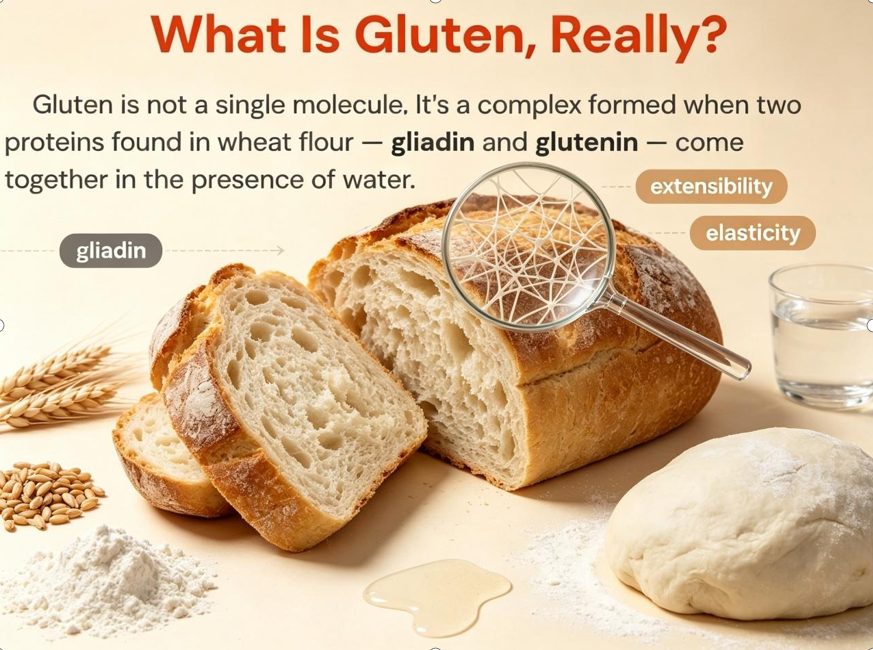
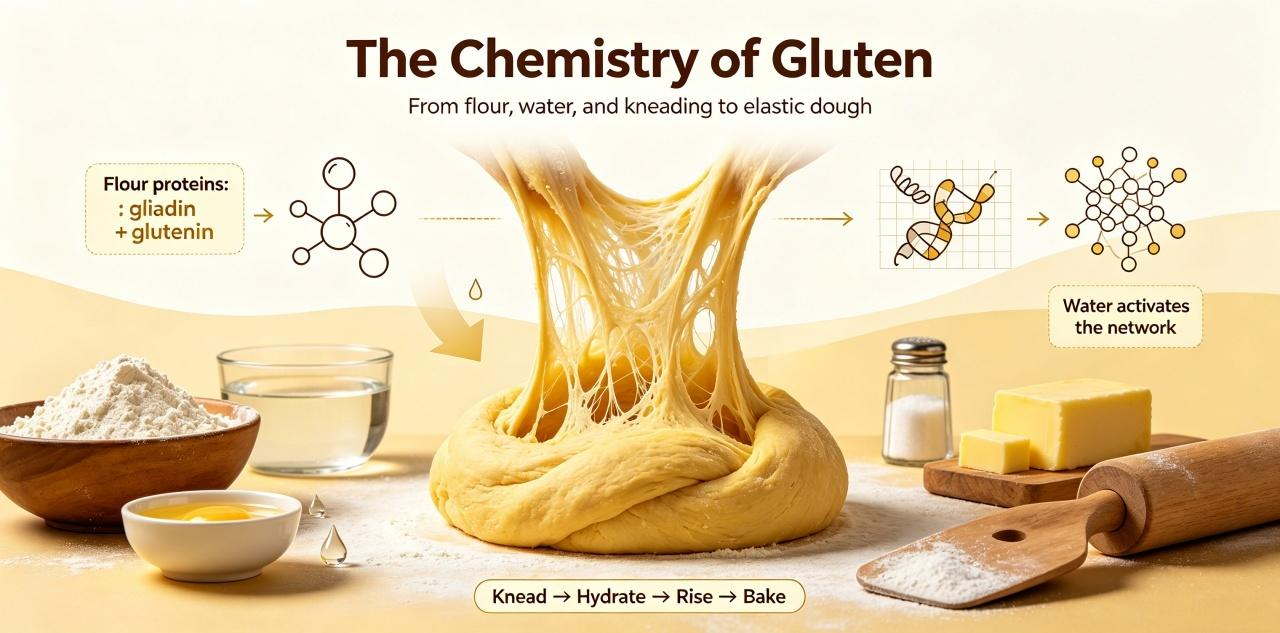
    Gluten is not a single molecule. It’s a complex formed when two proteins found in wheat flour — gliadin​ and glutenin​ — come together in the presence of water.

Gliadin​ contributes extensibility (stretchiness).

Glutenin​ contributes elasticity (strength and springback).

When you mix flour and water, these proteins hydrate and begin linking up. With mechanical action (kneading, folding, or even resting), they form long, elastic strands that trap carbon dioxide produced by yeast or chemical leaveners.
Think of gluten as a three‑dimensional net. The stronger the net, the more gas it can hold — and the taller, lighter your bread will be.

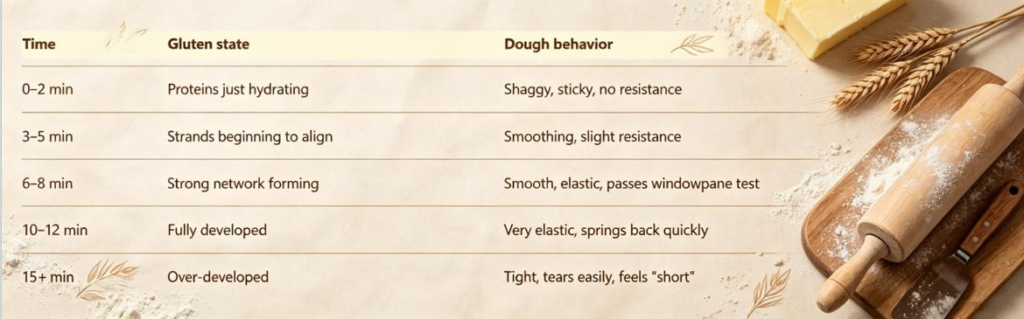
🥣 How Kneading Changes Gluten

The windowpane test:​ Take a small piece of dough and stretch it gently between your fingers. If it stretches thin enough to see light through without tearing, your gluten is well‑developed. Stop kneading.
Over‑kneading warning:​ If your dough looks shiny, feels extremely tight, and tears when you try to stretch it, you’ve gone too far. For bread, this is usually fixable with a long rest (30–60 min) to relax the strands. For pastries, it’s harder to reverse.

🧊 Resting and Relaxation: The Autolyse Secret

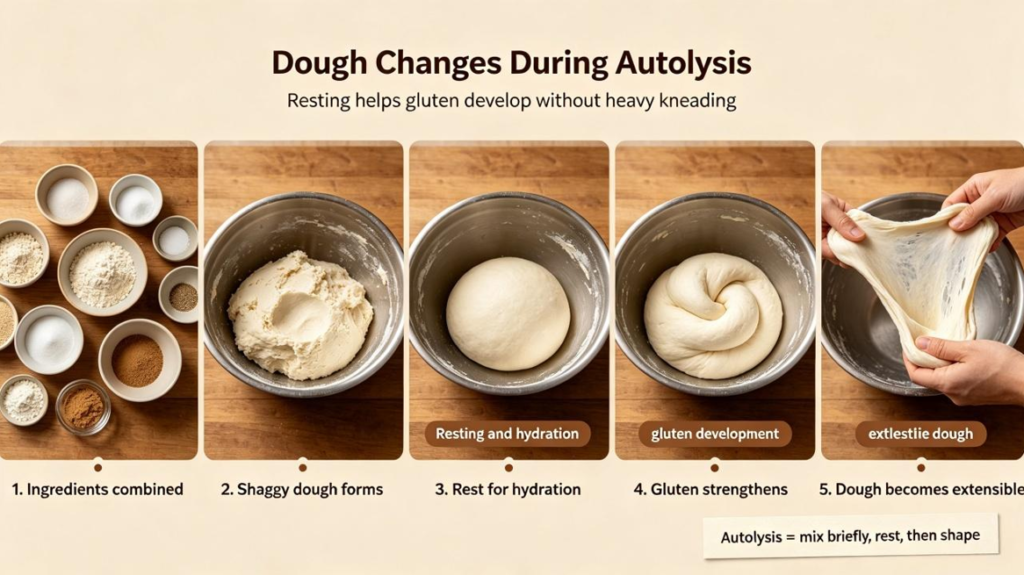
One of the most powerful techniques in professional baking is autolyse — mixing flour and water and letting it rest for 20–60 minutes before adding salt and yeast.

During autolyse:
  • Enzymes break down some starch into sugars (better flavor, better browning)
  • Gluten bonds form passively, without kneading
  • Dough becomes more extensible and less elastic

This means you can reduce active kneading time by 2–3 minutes while getting a silkier, more forgiving dough.
🔥 Heat: What Happens to Gluten in the Oven

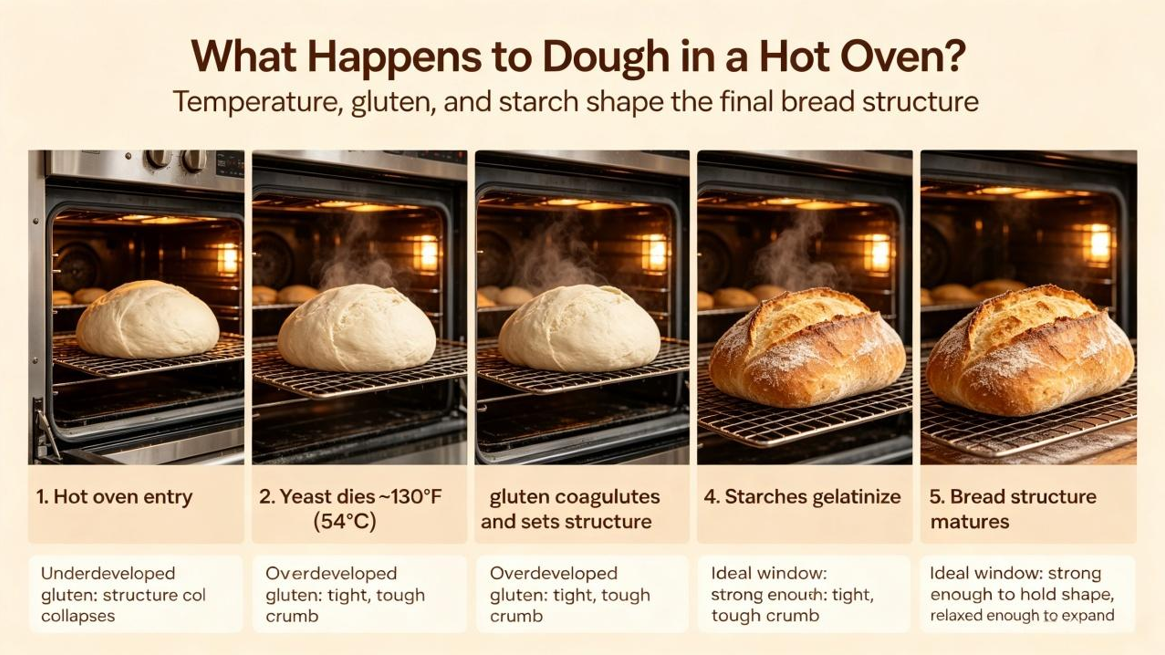
   When dough enters a hot oven (400–500°F / 200–260°C), several things happen rapidly:

  • Yeast dies​ at about 130°F (54°C), stopping gas production.
  • Gluten coagulates​ (sets) at about 165°F (74°C), locking in the final structure.
  • Starches gelatinize, absorbing water and contributing to crumb softness.
If gluten is under‑developed, the structure collapses before it sets → dense bread.
If gluten is over‑developed, the structure is too rigid → tough, tight crumb.
The ideal window: gluten developed enough to hold the shape, but relaxed enough to expand freely during oven spring.

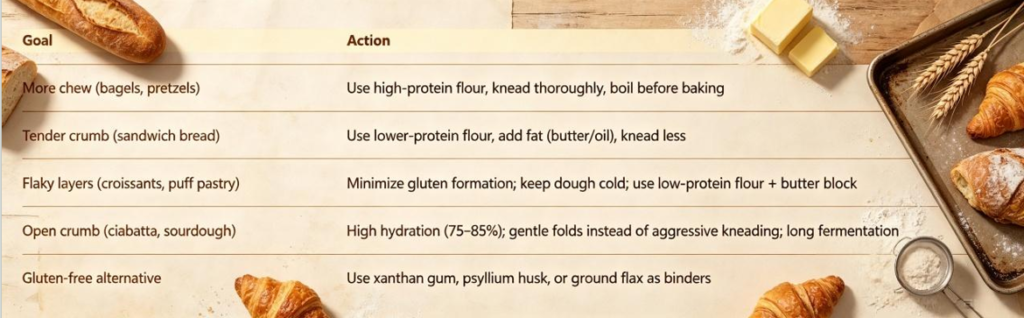
🛠️ Practical Ways to Control Gluten

4

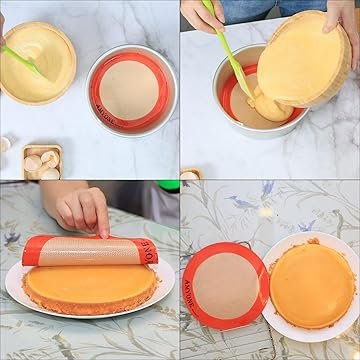
How Your Baking Mat Helps

Baker’s trick:​ Before kneading high‑hydration dough, place your silicone mat in the refrigerator for 10 minutes. The cold surface keeps the dough from overheating and gives you a wider window before gluten tightens up.

A silicone baking mat:
  • Stays cooler than a metal or wooden countertop
  • Provides a non‑stick surface so you don’t need excess flour (which dries dough and disrupts gluten)
  • Cleans up instantly — no scraping dried dough off the counter

💡 The Bottom Line

Gluten isn’t something to fear — it’s something to understand. Once you know how it forms, what weakens it, and how to control it, you stop guessing and start baking with intention.
The next time you’re kneading dough on your silicone mat, paying attention to the feel as it goes from sticky to smooth to elastic — you’re not just following a recipe. You’re reading the language of gluten. And that’s what separates a good baker from a great one.

Make every batch consistent.​ Our non‑stick silicone baking mat stays flat, stays cool, and gives you the perfect surface for developing gluten without sticking. Shop now →