Lemon Ricotta Almond Bars on an 8×8 Silicone Mat — Creamy, Zesty, Small-Batch
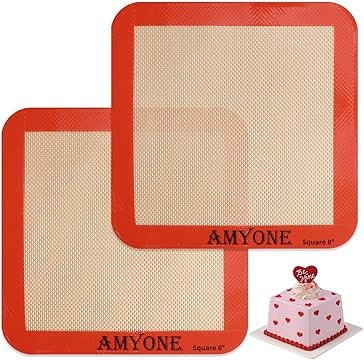
This small-batch recipe makes 16 creamy lemon bars with an almond crust and a ricotta-lemon filling that sets firm but stays tender. It uses one AMYONE 8×8 inch square silicone mat for pressing the crust, baking, cooling, and slicing — reusable, non-stick, no parchment. Chill before cutting for clean squares.
Lemon bars usually rely on flour shortbread and a custard-style lemon layer, but swapping part of the flour for almond flour and enriching the filling with ricotta gives you a denser, creamier bar that does not turn rubbery. The almond crust stays short and buttery, the ricotta smooths the lemon acidity, and a light chill sets the top so you get clean squares instead of messy scoops. Everything happens on one AMYONE 8×8 square silicone mat: press the crust directly on the mat, bake, pour the filling, bake again, cool, and slice. No parchment, no greasing, no second tray.
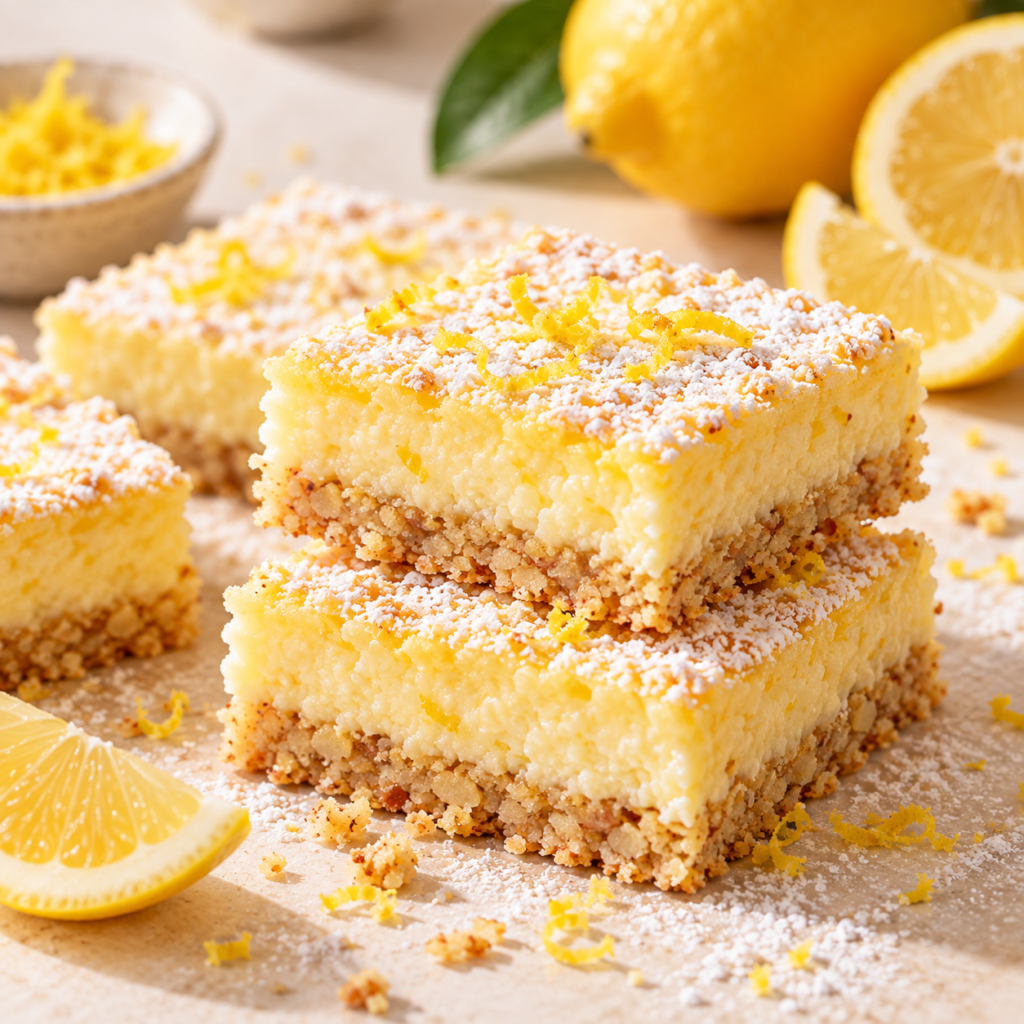
Ingredients
Almond crust
- 120g all-purpose flour
- 80g almond flour
- 60g granulated sugar
- 120g unsalted butter, melted and cooled to warm-room temperature
- 1g fine sea salt
- 1 tsp lemon zest
Lemon ricotta filling
- 400g whole-milk ricotta, drained 15–30 minutes if watery
- 150g granulated sugar
- 3 large eggs, room temperature
- 120ml fresh lemon juice (about 3–4 lemons)
- 10g lemon zest
- 1 tsp vanilla extract
- 30g all-purpose flour
- 1g fine sea salt
- Powdered sugar, for dusting
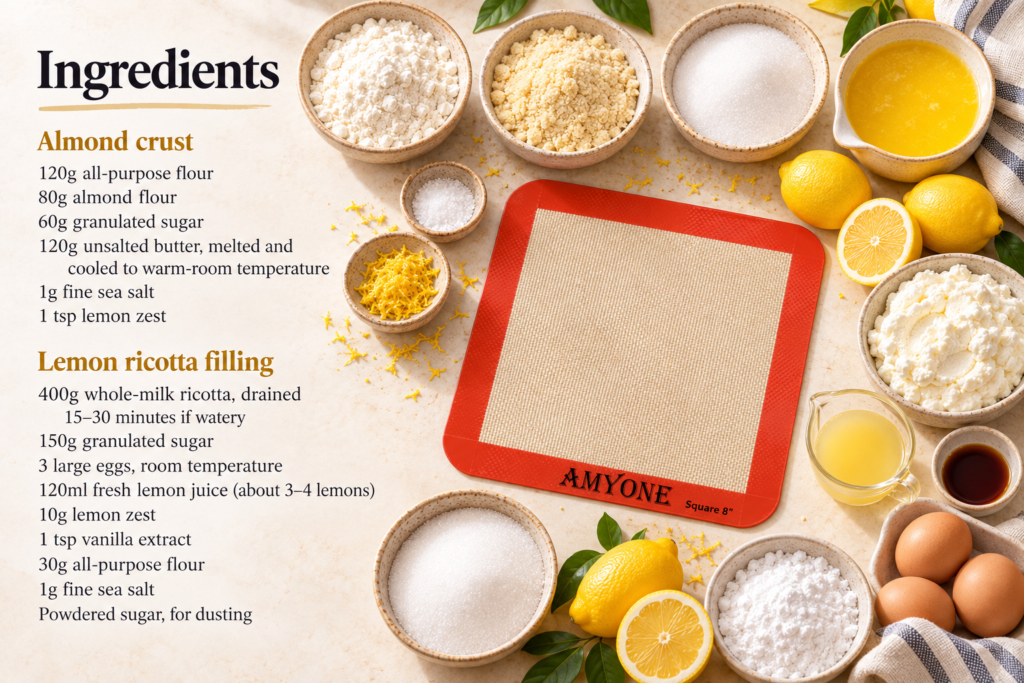
Instructions
Step 1 — Make and press the almond crust on the 8×8 mat.
Mix flour, almond flour, sugar, salt, and lemon zest. Pour in melted butter and stir until the texture looks like damp sand. Place the AMYONE 8×8 mat on a rigid 8×8 pan, tip the crumbs onto the mat, and press into an even layer across the full square using the back of a spoon or a flat spatula. The mat edge is your boundary, so the crust fills 8×8 with no ruler.
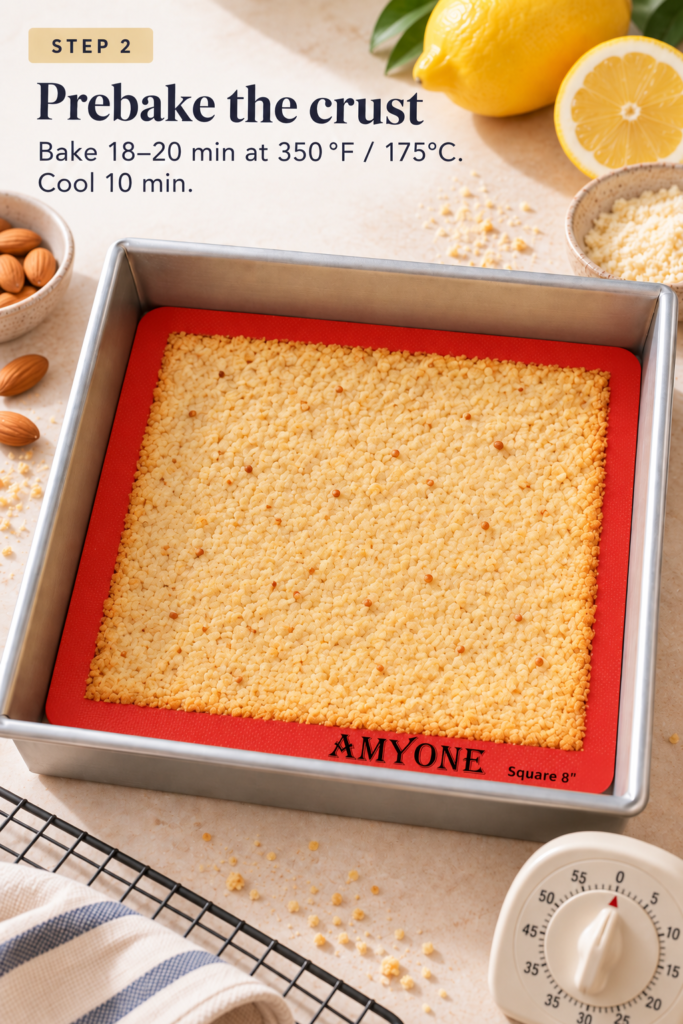
Step 2 — Prebake the crust.
Preheat oven to 350°F / 175°C. Bake the crust on the mat for 18–20 minutes until pale golden at the edges and dry on top. Cool on the pan for 10 minutes. Prebaking keeps the almond base crisp under the wet ricotta filling and prevents a soggy bottom.
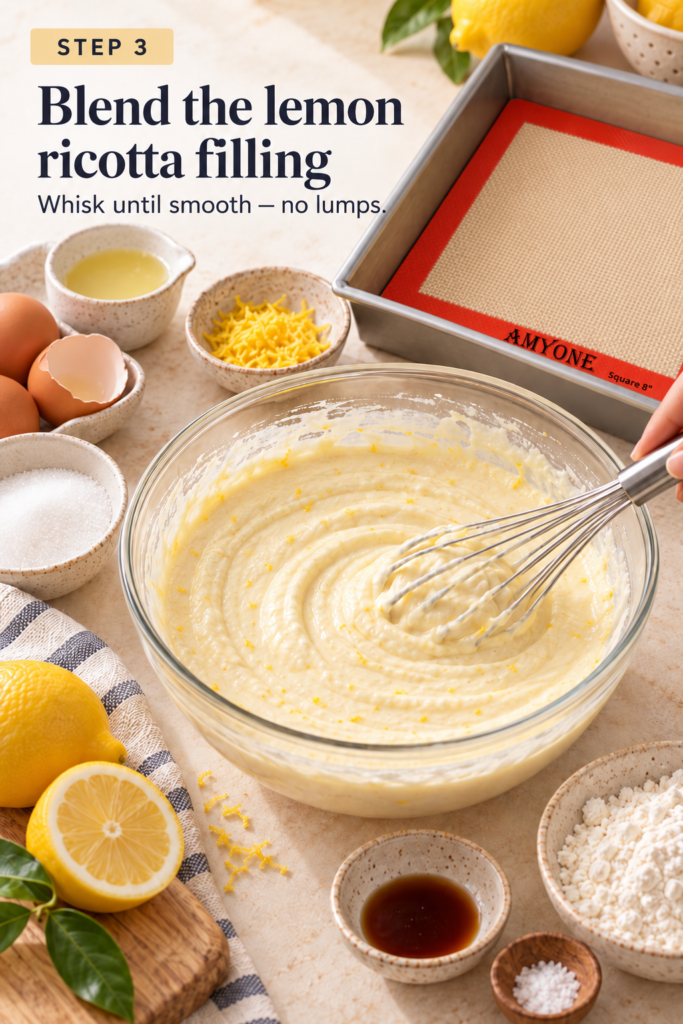
Step 3 — Blend the lemon ricotta filling.
Whisk ricotta until smooth, then whisk in sugar, eggs one at a time, lemon juice, lemon zest, vanilla, flour, and salt. Whisk just until no ricotta lumps remain. A smooth batter emulsifies better; overbeating adds air and can make the baked layer crack or rise unevenly.
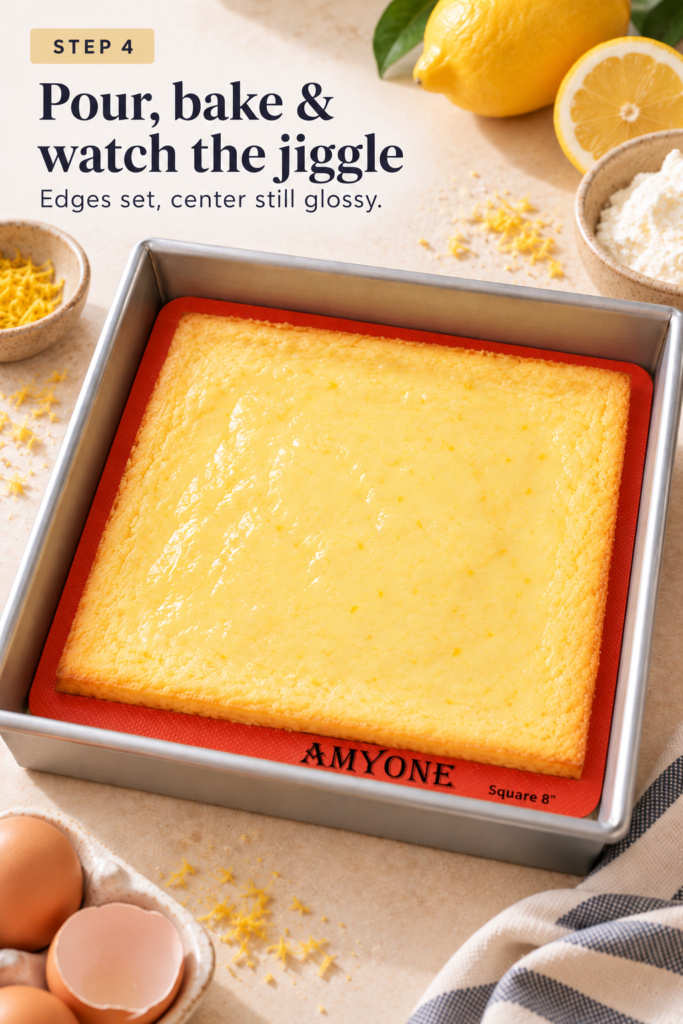
Step 4 — Pour, bake, and watch the jiggle.
Pour the filling over the warm crust and spread evenly. Bake at 350°F / 175°C for 28–34 minutes until the edges are set and the center still has a slow, glossy jiggle when you nudge the pan. Pull it at the jiggle stage: continued carryover heat sets the middle without drying it.
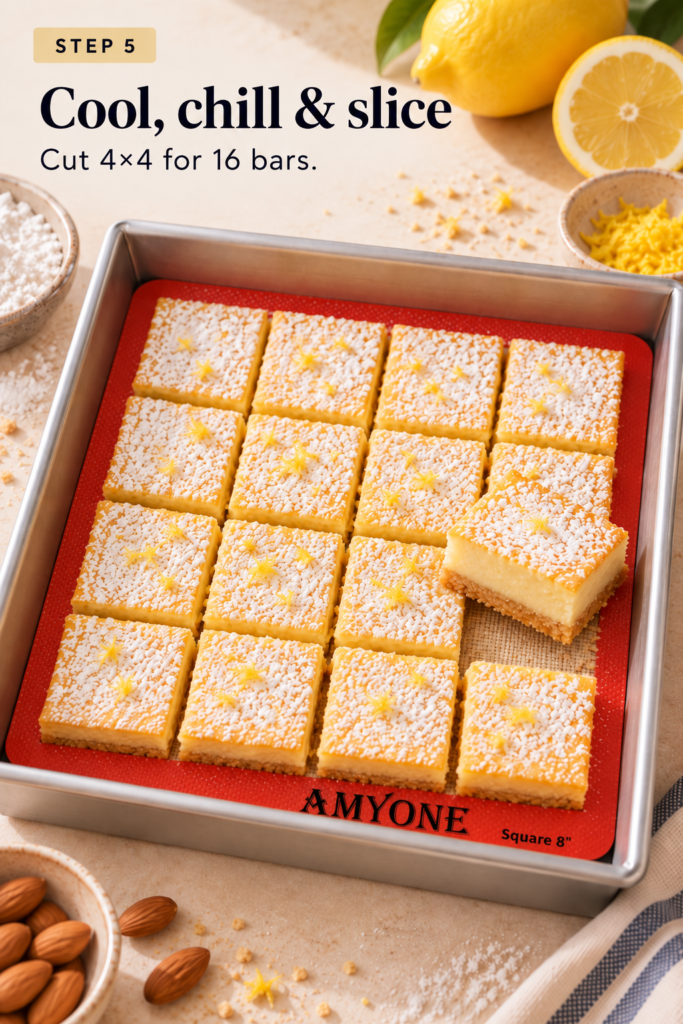
Step 5 — Cool, chill on the mat, and slice.
Cool the bars on the 8×8 mat at room temperature for 1 hour, then refrigerate uncovered or loosely covered for at least 3 hours. Use the mat edge as a cutting guide: score 4 columns × 4 rows for 16 squares, wipe the knife with warm water between cuts, and dust with powdered sugar before serving.
Pro Tips
- Drain watery ricotta first. If liquid sits on top, strain 15–30 minutes — excess moisture makes the filling loose and can leave a watery layer.
- Zest before juicing. Grate the lemons first while the skin is dry; you get more oils and the juice step is faster.
- Do not overbake for “fully firm.” The center should jiggle slowly at exit; it firms in the fridge, not in the oven.
- Chill before cutting. Warm bars tear; cold bars give sharp bakery squares.
- Use the 8×8 mat as both bakeware and cutting board base. One mat handles crust, filling, cooling, and slice guide — no parchment, no second tray.
- Almond flour burns faster than wheat flour. Check the crust at 16 minutes if your oven runs hot.
Frequently asked questions
Can I make these gluten-free?
Yes. Replace the all-purpose flour in the crust and filling with certified gluten-free flour or extra almond flour, and use certified gluten-free almond flour to avoid cross-contact. Texture will be more tender and slightly less structured; chill fully before cutting. Do not label “gluten-free” unless every ingredient and workspace is verified.
Why is my filling watery or grainy?
Watery filling usually means wet ricotta or too much lemon juice; drain the ricotta and keep juice around 120ml for an 8×8 batch. Grainy texture means unwhisked ricotta lumps — push the filling through a fine sieve or whisk longer before baking.
Why did the top crack?
Overbaking or a hot oven is the usual cause. Bake until the edges set and the center jiggles slowly, then cool gradually. A few hairline cracks are fine; dust powdered sugar to hide them.
Can I use the 8×8 silicone mat instead of lining the pan with parchment?
Yes. Press the crust on the mat, prebake, add filling, and bake again; the mat is non-stick, so cooled and chilled bars lift and slice without paper. Place the mat on a rigid 8×8 pan so it stays flat during the double bake.
How long do they keep?
Store covered in the refrigerator up to 5 days. The bars actually taste brighter after a night’s chill because the lemon and almond settle. For longer storage, cut and freeze up to 2 months; thaw in the fridge and dust with powdered sugar after slicing.
Can I reduce the sugar?
Reduce filling sugar to 110–120g if you want sharper lemon, but do not cut the crust sugar too low or the base loses its short, buttery bite. Taste the batter minus egg concern by mixing a tiny cooked sample in a spoon over simmering water if you adjust sweeteners.