
Essential Tools for Every Baker (Beyond the Baking Mat)
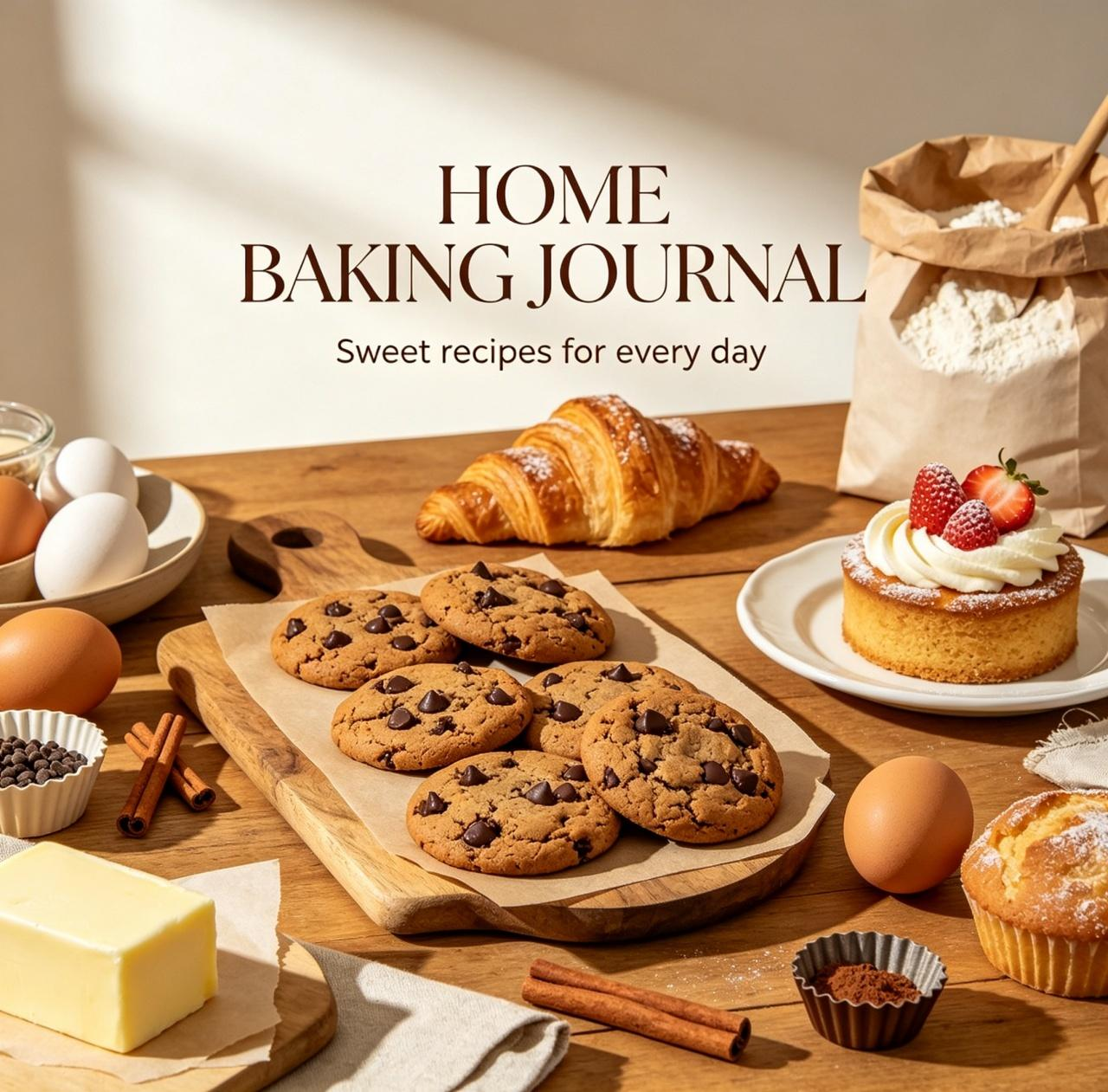
These are the tools you’ll reach for in literally every recipe. Skip them and you’ll feel it.
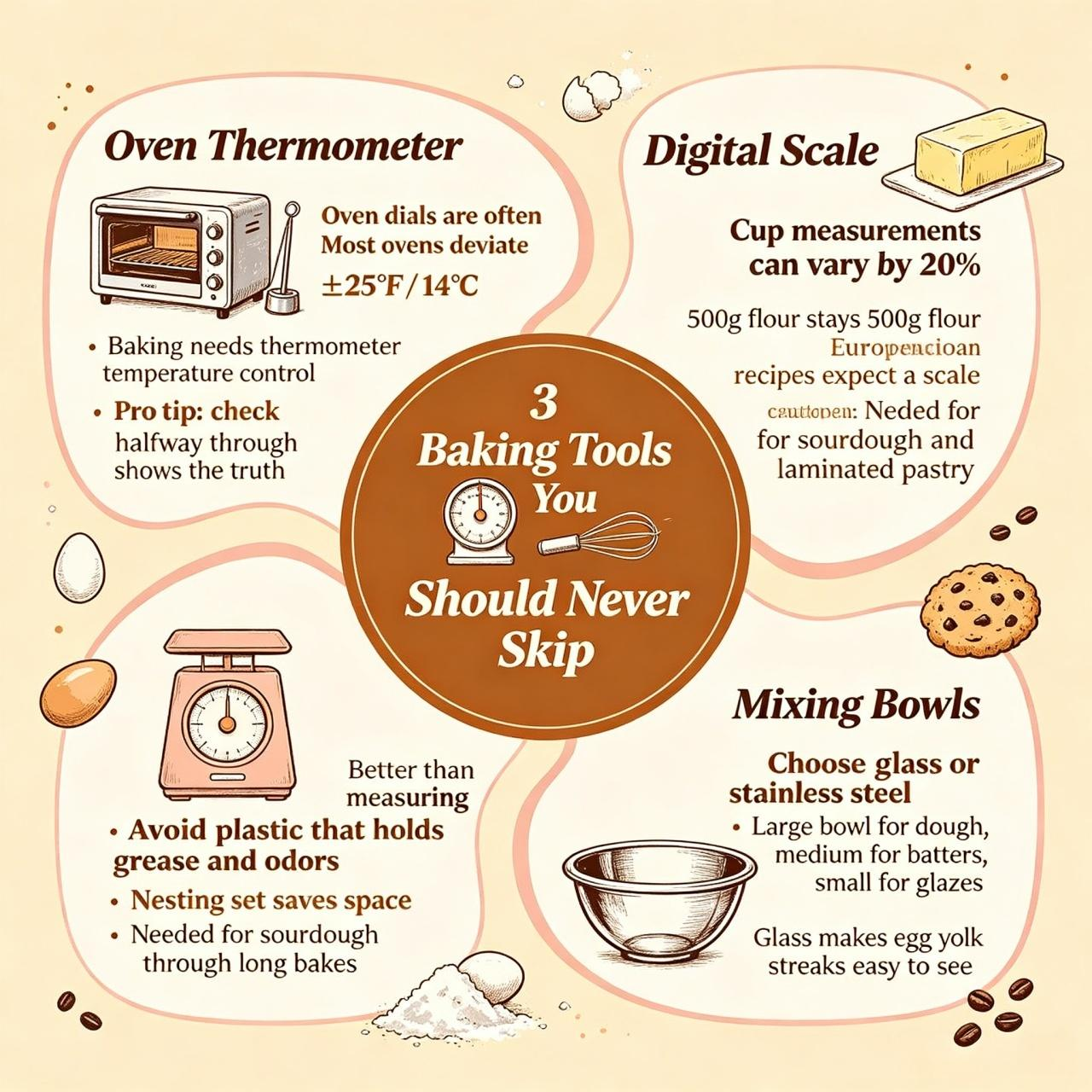
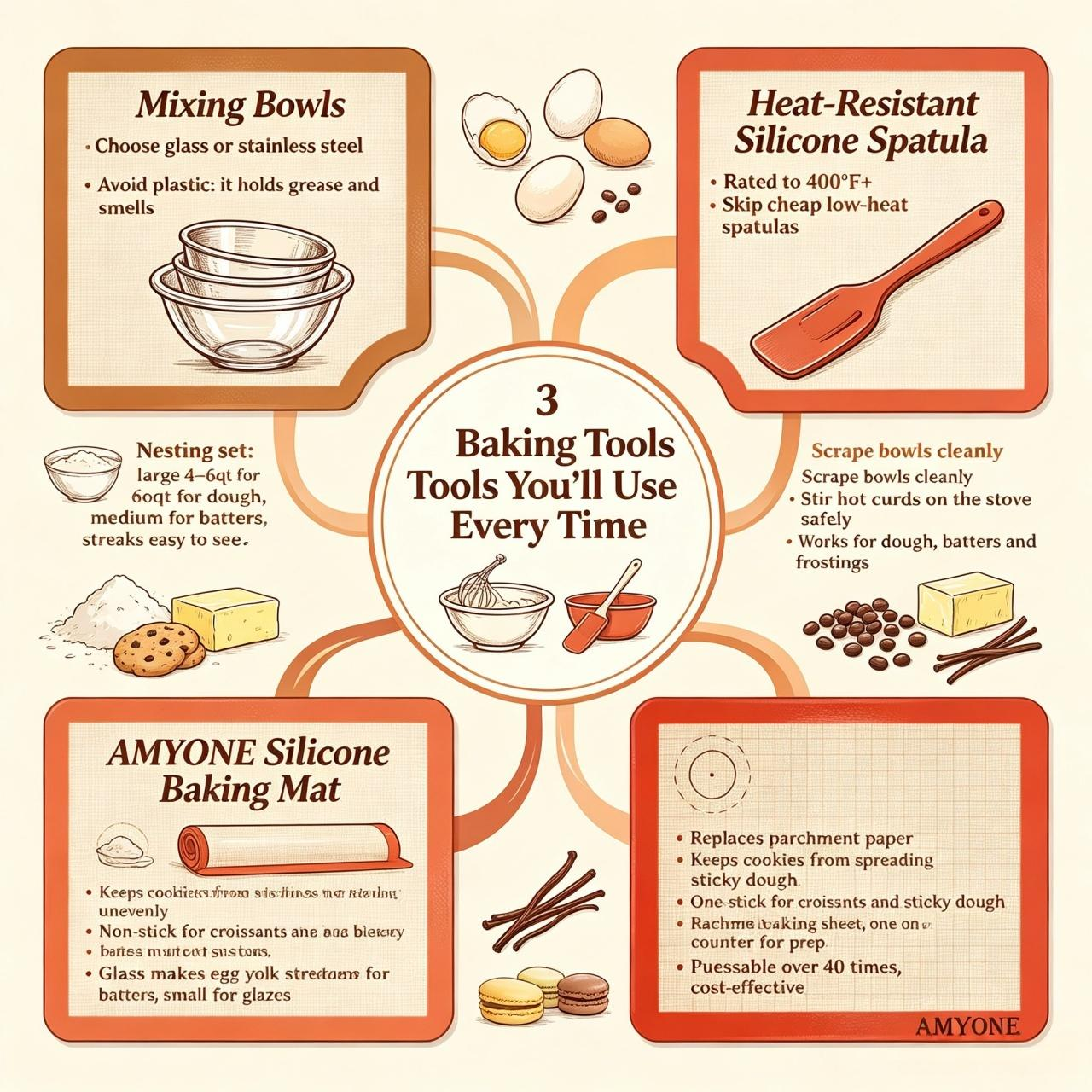
Plastic holds onto grease and smells. Get a nesting set: one big (4–6 qt) for dough, medium for batters, small for glazes. Glass lets you see if there’s still yolk streaks in your whites.
Not the cute cheap ones that melt on a saucepan. Get one rated to 400°F+ so you can scrape down a bowl andstir a curd on the stove.
🟡 The “Soon As You’re Hooked” Tier
You can bake without these, but once you have them you won’t go back.
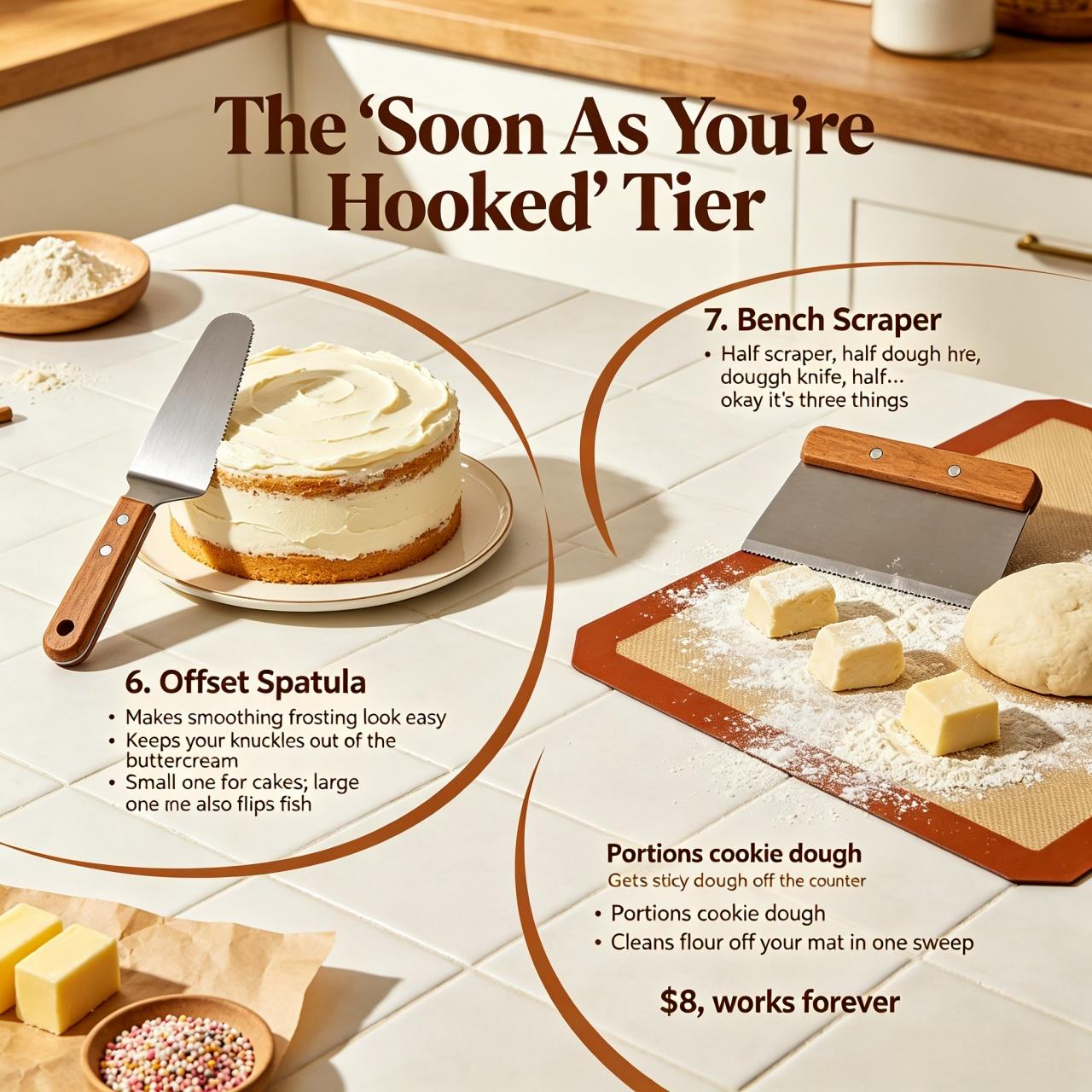
Makes smoothing frosting look easy and keeps your knuckles out of the buttercream. The small one is for cakes; the large one also flips fish if you cook dinner.
Half scraper, half dough knife, half… okay it’s three things. Gets sticky dough off the counter, portions cookie dough, cleans flour off your mat in one sweep. $8, works forever.
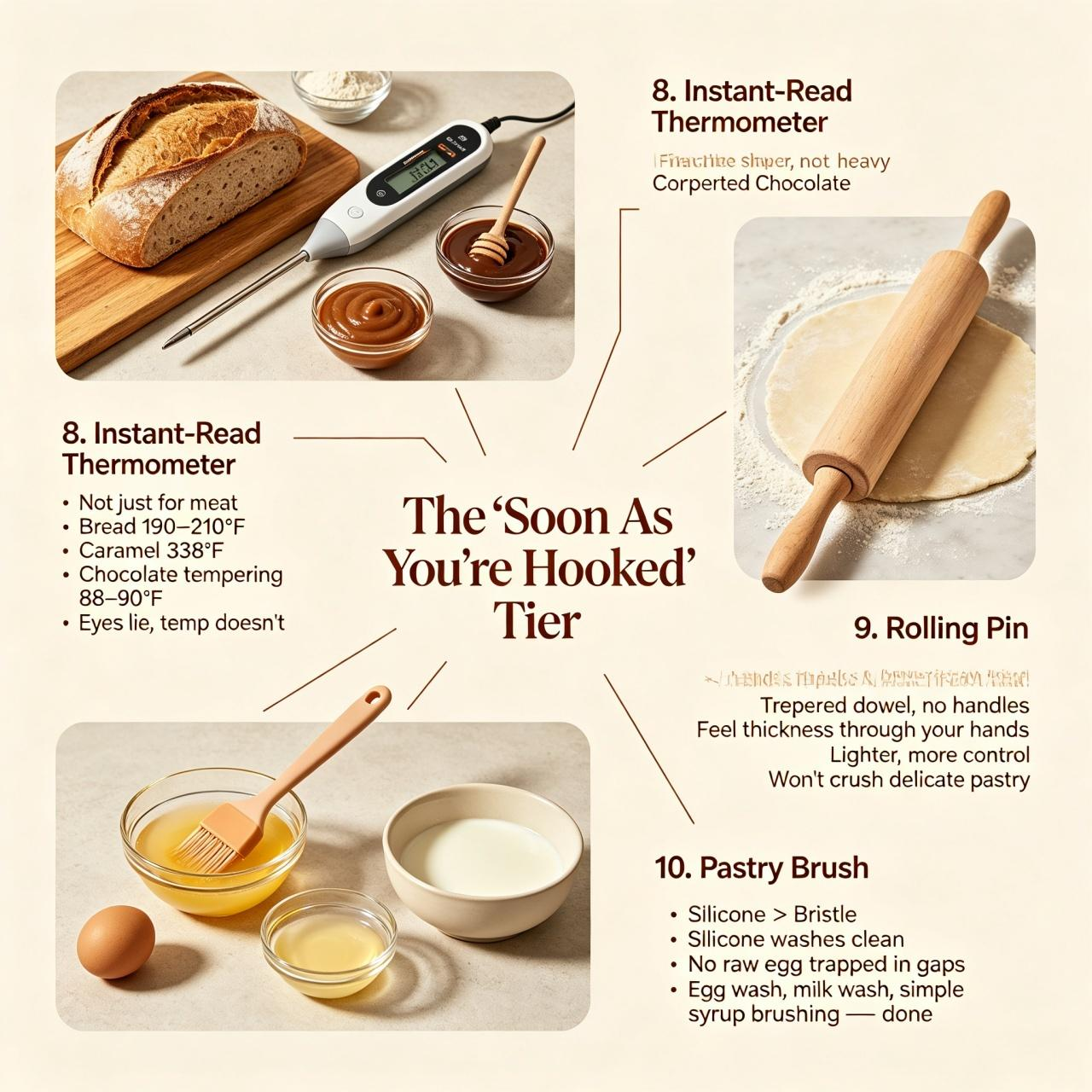
Not just for meat. Bread is done at 190–210°F depending on loaf. Caramel? 338°F. Chocolate tempering? 88–90°F. You get the idea — eyes lie, temp doesn’t.
The French style (tapered dowel, no handles) teaches you to feel thickness through your hands. Lighter, more control, and it won’t crush delicate pastry.
🔴The “You’re Doing This for Real” Tier
What I’d Skip (For Now)
Unit askers — strawberry huller, avocado slicer, garlic press… none of these belong near a bakery setup.
Glass loaf pans — they bake unevenly for quick breads. Fancy embossed rolling pins — pretty, but you’ll use them once.
Marble pastry board — cool for croissants, but your counter + a chilled baking mat does 90% of the same job for $0 extra.
Quick answers to
your questions
Not for starting. You can cream butter by hand, knead most doughs by hand, and whisk egg whites with a $12 balloon whisk. A stand mixer becomes nice once you bake weekly.
Metal for even browning (cookies, cakes, muffins). Glass for things that start on stovetop and finish in oven (brownies, some crisps). Avoid glass for yeast breads — they brown too slow on the bottom.